
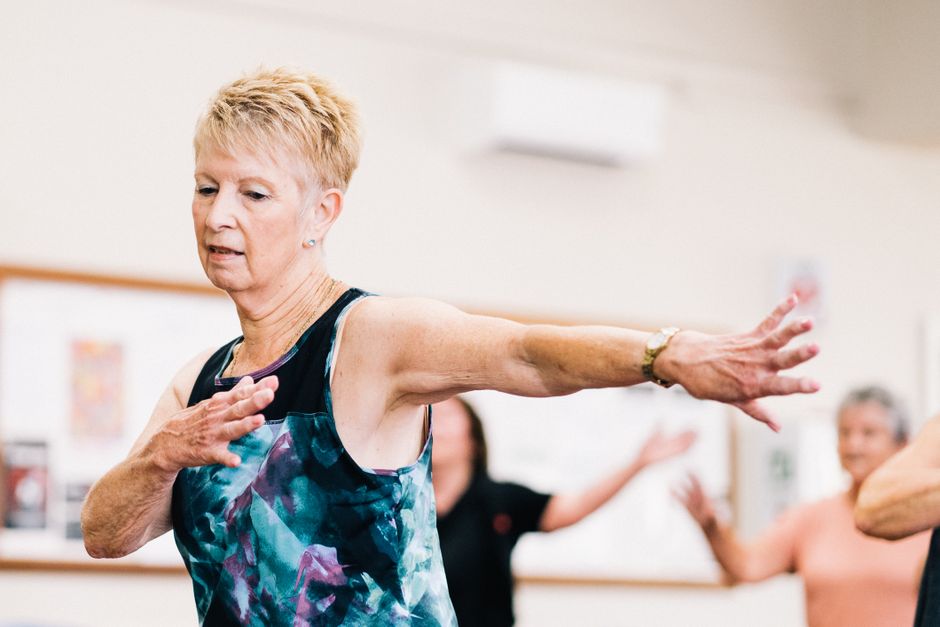
What fitness programs are appropriate for assisted living residents?
Fitness programs in assisted living should focus on safe movement, strength, balance, flexibility, and confidence rather than athletic performance. Activities can be adapted for people who walk independently, use a cane or walker, spend much of the day seated, or are recovering from illness.
A well-designed program usually includes several types of movement:
- Strength exercises: Light resistance bands, small hand weights, seated leg lifts, wall push-ups, and repeated sit-to-stand movements can help support everyday tasks.
- Balance activities: Supported heel-to-toe walking, weight shifting, reaching exercises, and standing near a sturdy surface may reduce the risk of falls.
- Flexibility work: Gentle stretching for the shoulders, neck, hips, ankles, and legs can make dressing, bathing, and walking more comfortable.
- Endurance activities: Walking indoors, seated marching, light dancing, and short movement sessions can support heart and lung function.
- Functional practice: Exercises that resemble daily activities often have practical value, such as rising from a chair, turning safely, reaching for an object, or stepping over a low obstacle.
The safest programs offer choices rather than requiring every resident to perform the same exercise in the same way.
Why does exercise matter for older adults in assisted living?
Regular physical activity can help residents maintain mobility, muscle strength, balance, mood, sleep quality, and independence. Exercise may also make routine activities less tiring, including walking to meals, using the bathroom, transferring between a bed and chair, or carrying light personal items.
Movement is also useful for residents living with chronic conditions. Carefully adjusted activity may support people with arthritis, diabetes, osteoporosis, Parkinson’s disease, or mild cognitive impairment. The appropriate type and intensity depend on the person’s health history, medications, stamina, and current abilities.
Exercise does not have to be strenuous to be useful. A resident who completes several short movement sessions during the day may gain more benefit than someone who attempts a demanding class and becomes exhausted or discouraged.
How often should seniors exercise in assisted living?
Many older adults benefit from some movement every day, with a combination of aerobic activity, strengthening, balance practice, and stretching spread throughout the week. The exact schedule should reflect personal ability and medical guidance.
A practical weekly pattern might include:
- Short walking or seated endurance sessions on most days
- Strength exercises two or more days per week, with rest between harder sessions
- Balance activities several times per week
- Gentle stretching daily or whenever stiffness develops
Sessions can be brief. Five to ten minutes of movement may be a reasonable starting point for someone who is inactive, easily fatigued, or returning to exercise after an illness. Time and intensity can increase gradually if the resident feels well afterward.
Pain, severe fatigue, dizziness, or worsening shortness of breath is not a sign that the program is working. These symptoms should be reported and evaluated before activity continues.
What are good seated exercises for residents with limited mobility?
Chair-based exercises can provide meaningful physical activity without requiring residents to stand. The chair should be stable, without wheels, and placed on a clear surface.
Examples include:
- Marching one foot at a time while seated
- Straightening one knee and lowering the leg slowly
- Moving the ankles in circles
- Squeezing and releasing the shoulder blades
- Reaching one arm overhead at a comfortable height
- Turning the head gently from side to side
- Pressing the hands together for several seconds
- Lifting the toes and then the heels
- Practicing upright posture by sitting tall and relaxing the shoulders
Residents should avoid holding their breath during strengthening movements. Slow, controlled motion is generally safer than rapid repetition. A seated routine can also be combined with music, conversation, or simple counting to make it easier to follow.
Chair exercises are not automatically risk-free. Residents with severe weakness, recent surgery, uncontrolled symptoms, or a history of fainting may need an individualized plan before participating.
How can assisted living programs reduce fall risk?
Fall prevention requires more than balance exercises. A complete approach combines physical training with attention to footwear, vision, medications, lighting, walking surfaces, and safe use of mobility aids.
Balance activities should begin with support nearby. Residents may practice standing behind a sturdy chair, shifting weight from side to side, or reaching within a safe range. Progression should be gradual. A person who is steady while seated may not be ready to stand on one leg or walk while turning the head.
Strengthening the hips, thighs, ankles, and trunk can improve the physical control needed for transfers and walking. Practicing how to rise from a chair may be especially useful because difficulty standing is often connected with fall risk.
Seasonal conditions also matter in Coatesville, PA. Snow, ice, wet entryways, and reduced daylight can limit outdoor walking and make indoor activity more practical during parts of the year. Clear hallways, adequate lighting, dry floors, and properly fitted footwear remain important even when exercise takes place inside.
What should residents ask before joining a fitness class?
Residents and family members may want to ask how the class is adapted for different ability levels. A suitable program should allow participants to remain seated, use support, take rest breaks, or skip movements that are uncomfortable.
Useful questions include:
- Is the instructor trained to work with older adults?
- Can residents participate from a chair?
- What happens if someone becomes tired or dizzy?
- Are mobility aids permitted during the class?
- Is the room free of tripping hazards?
- How are residents with memory loss or communication difficulties supported?
- Can the program be adjusted after a hospitalization or change in health?
- Are exercises reviewed when medications or diagnoses change?
A class should not pressure residents to compete, move faster than is comfortable, or continue through warning symptoms.
How can exercise be adapted for memory loss or cognitive changes?
Simple, familiar routines often work best for residents with dementia or other cognitive changes. Instructions should be brief and demonstrated visually when possible. Repeating the same sequence can reduce confusion and build familiarity.
Music, rhythm, and gentle group movement may encourage participation, but volume and stimulation should be adjusted for each person. Some residents may do better with one-to-one guidance or a quiet setting.
The goal is not perfect performance. Participation, comfort, and safe movement are more meaningful than completing every repetition. Staff should watch for signs of distress, frustration, pain, or overstimulation.
When should exercise stop?
Exercise should stop if a resident experiences chest pain, fainting, sudden weakness, severe shortness of breath, new confusion, unusual sweating, or sharp or escalating pain. New symptoms should be reported promptly.
Residents should also tell staff about repeated joint pain, swelling, unusual fatigue, balance changes, or a noticeable decline in walking ability. A medical review may be needed before the exercise plan resumes.
The most useful fitness program is one that fits the resident’s current abilities and can be adjusted over time. Safe, regular movement—whether walking, stretching, chair exercise, or practicing everyday transfers—can help assisted living residents remain active and involved in daily life.
